Beyond the Kasbahs: Unusual Ways to Experience Morocco's Cultural Festivals
 Travel plans built entirely around monuments tend to blur together after a while. Another fortress, another courtyard, another carefully angled photo. Festivals, on the other hand, refuse to sit still. They spill into streets, fields, and mountain passes, carrying with them rivalries, pride, and the occasional runaway goat. If you want to understand Morocco beyond its architectural headlines, time your trip around its local celebrations.
Many visitors skim past these events because they seem unpredictable. That is precisely the point. Cultural festivals reveal how communities see themselves when they are not performing for tourists but celebrating for their neighbors. The experience demands a bit more flexibility than a museum ticket, yet it rewards you with something far more revealing.
Planning Around the Unexpected
Start by researching regional calendars rather than fixed sightseeing circuits. Harvest festivals in fruit-growing towns, rose celebrations in valley communities, and tribal moussem gatherings tied to saints’ days all follow seasonal rhythms. Dates may shift slightly each year based on lunar calendars or agricultural cycles, so double-checking locally is essential.
Attendance at a moussem also offers a window into rural networks that rarely surface in city itineraries. Families reunite, tribal affiliations are reaffirmed, and negotiations—social, economic, sometimes matrimonial—unfold under tented shade. Spend time watching how elders are greeted, how disputes are mediated, how younger participants balance tradition with modern life. These are living structures of community, not staged performances.
If invited to share tea inside a tent, accept graciously and settle in. Conversations may unfold slowly, with pauses that feel longer than you expect. Resist the urge to fill them. Listening carefully often reveals more than asking a rapid series of questions. It also spares you from accidentally agreeing to purchase a horse.
Finding Festivals Off the Main Tourist Trail
Not every meaningful celebration appears on glossy travel blogs. Smaller regional events—almond blossom gatherings, date harvest markets, village folklore days—often provide more intimate experiences than headline festivals. To discover them:
- Consult local tourism offices in secondary towns rather than relying solely on major city resources.
- Ask hotel owners or guesthouse managers about upcoming community events.
- Check regional social media pages where announcements are often posted in Arabic or French.
- Be flexible with transportation plans in case festivities extend later than scheduled.
Venturing slightly off well-worn routes can yield encounters that feel refreshingly unscripted. You may find yourself sitting beside a farmer explaining irrigation systems, or clapping along to a performance where no one expects you to understand the lyrics—only the rhythm.
Participating Without Taking Over
Engagement matters. So does restraint. Joining a dance circle when invited can be delightful; commandeering it for an impromptu solo is less so. Observe first. Notice how locals interact, how space is shared, how elders are positioned at the heart of certain ceremonies.
Some moments demand seriousness. Religious processions, prayers at shrine sites, and commemorative rituals are not spectacles. Lower your camera. Stand quietly. Festivals are not a theme park of exotic images; they are expressions of collective memory and belief.
Seasoned Planning for Seasonal Celebrations
Weather shapes festival experiences as much as culture does. Spring blossom events bring cool mountain breezes, while summer harvest festivals can unfold under relentless sun. Pack accordingly and build in rest time. A shaded café break is not laziness; it is survival strategy.
Transportation may also shift during major gatherings. Roads close for parades, traffic thickens, and buses fill quickly. Leaving earlier than planned and confirming return transport prevents the charming unpredictability of a festival from turning into logistical chaos.
Final Course at the Festival Table
Experiencing Morocco through its festivals transforms travel from observation into participation. Monuments remain impressive, but they do not laugh, argue, sing, or share tea. Communities do. By aligning your itinerary with harvests, saint days, and regional celebrations, you gain access to stories that rarely appear on souvenir postcards.
Festivals demand adaptability, curiosity, and a willingness to look slightly out of place for a while. In return, they offer something far richer than a checklist of landmarks. They offer context. And occasionally, they offer a second helping of cherries you did not plan for—but will absolutely accept.
Once you identify a festival, build your itinerary outward from it. Instead of squeezing it into a rushed afternoon, allow time to explore the surrounding countryside, visit nearby villages, and adjust if the main procession runs late. It probably will. Patience becomes part of the cultural exchange.
Accommodation also requires strategy. Smaller towns hosting popular events fill quickly, often with domestic travelers. Booking early helps, but so does considering nearby villages within a short drive. Waking up among orchards before heading into a fruit festival beats scrambling for a last-minute room above a crowded café.
Fruit Festivals Beyond the Postcard
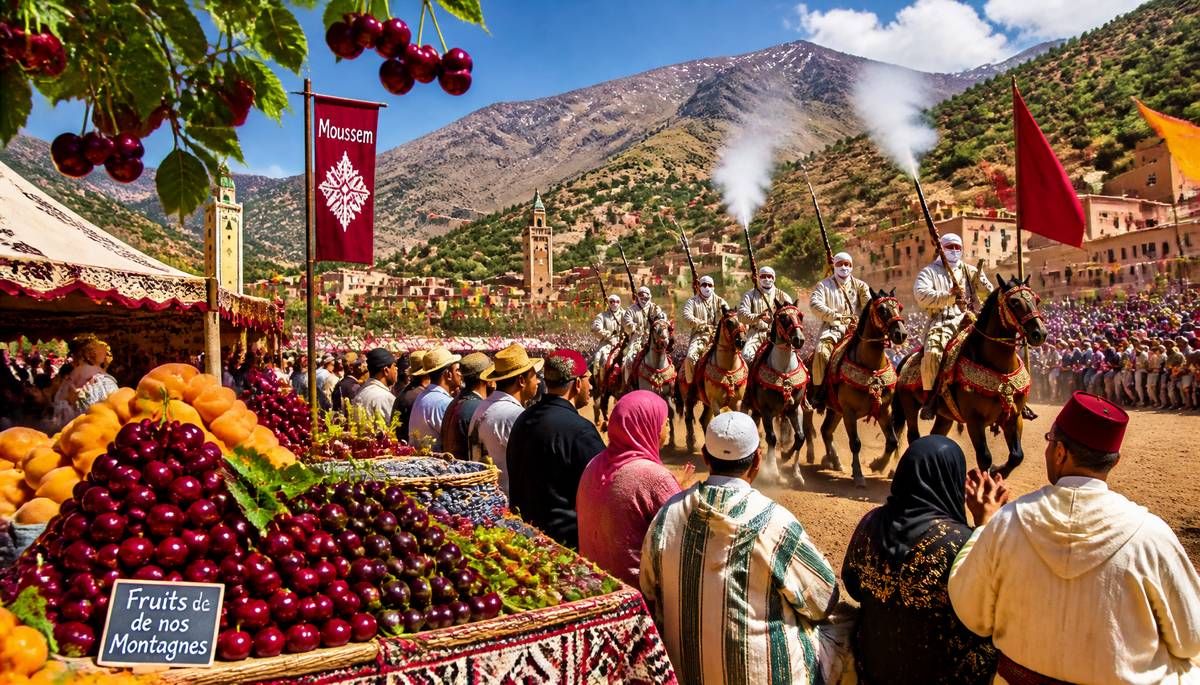
Morocco’s fruit festivals celebrate more than produce. A cherry festival in a mountain town, for example, doubles as a stage for local musicians, artisans, and school groups eager to perform. Expect parades, dance competitions, and stalls stacked with pyramids of fruit arranged with competitive precision. Yes, someone absolutely spent twenty minutes perfecting that display.
To experience these events meaningfully, move beyond sampling and selfies. Strike up conversations with vendors about the harvest. Ask how weather patterns affected yields this year. Observe which families return to the same stall year after year. These interactions offer insight into agricultural life that no guidebook summary can replicate.
Dress practically, especially in summer heat, and prepare for crowds. Sunscreen is not optional, and neither is hydration. Festivals often stretch through long afternoons, and shade can be a prized commodity.
Moussem Gatherings and Tribal Identity
Moussem festivals, often linked to religious commemorations, combine spiritual devotion with communal celebration. Some feature equestrian displays where riders charge in unison before firing rifles skyward in choreographed bursts. The ground trembles. Your camera might too.
These gatherings are deeply rooted in local identity. Approach them with respect. Modest clothing, permission before photographing individuals, and attentiveness during ceremonial moments signal that you are present to learn rather than merely observe.
|
|

